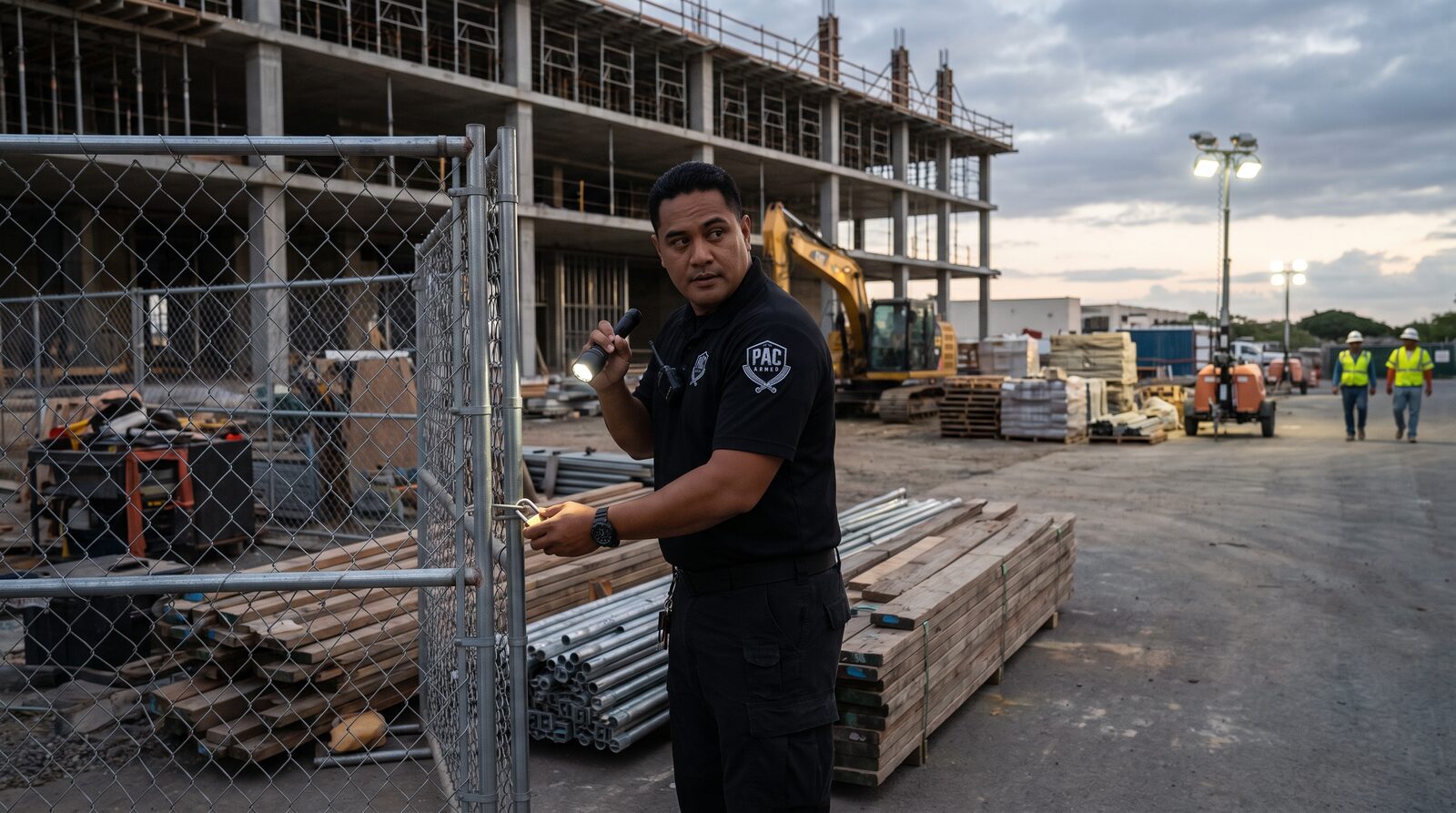
During working hours, a construction site is filled with movement. Crews arrive, deliveries are made, machinery is operating, and supervisors are watching the progress.
After the workers leave, the same site can become a much easier target.
Tools, vehicles, building materials, fuel, copper, appliances, and unfinished structures may remain behind. Temporary fencing and changing access points can also make it difficult to know whether someone belongs on the property.
Construction site security helps maintain control during the hours when the project is most exposed.
Theft Is Only One Construction-Site Concern
The most obvious concern is stolen equipment or materials, but it is not the only issue that can interrupt a project.
Unsecured sites may also experience:
- Trespassing
- Vandalism
- Illegal dumping
- Unauthorized vehicle access
- Damage to fencing or gates
- Entry into unfinished structures
- Interference with machinery
- After-hours gatherings
- Fire or smoke concerns
- Safety hazards created by unauthorized activity
Even an incident that does not result in a major loss can delay work. A damaged entrance, disturbed work area, police response, or missing equipment may affect the next crew's ability to begin on time.
The security plan should focus on keeping the site controlled and ready for the next workday.
Construction Sites Change Constantly
A job site is not a finished building with permanent entrances and predictable pathways.
The layout may change from one week to the next. A gate may move. A new structure may become accessible. Materials may be delivered to a different location. Temporary lighting may be added or removed. One phase of the project may end while another begins.
Security instructions must change with the site.
An officer who is not informed about new access points or newly delivered equipment cannot monitor the property effectively. Regular communication between the contractor, superintendent, property owner, and security provider is essential.
Post orders should be updated as the project develops.
Access Control Begins With Knowing Who Belongs There
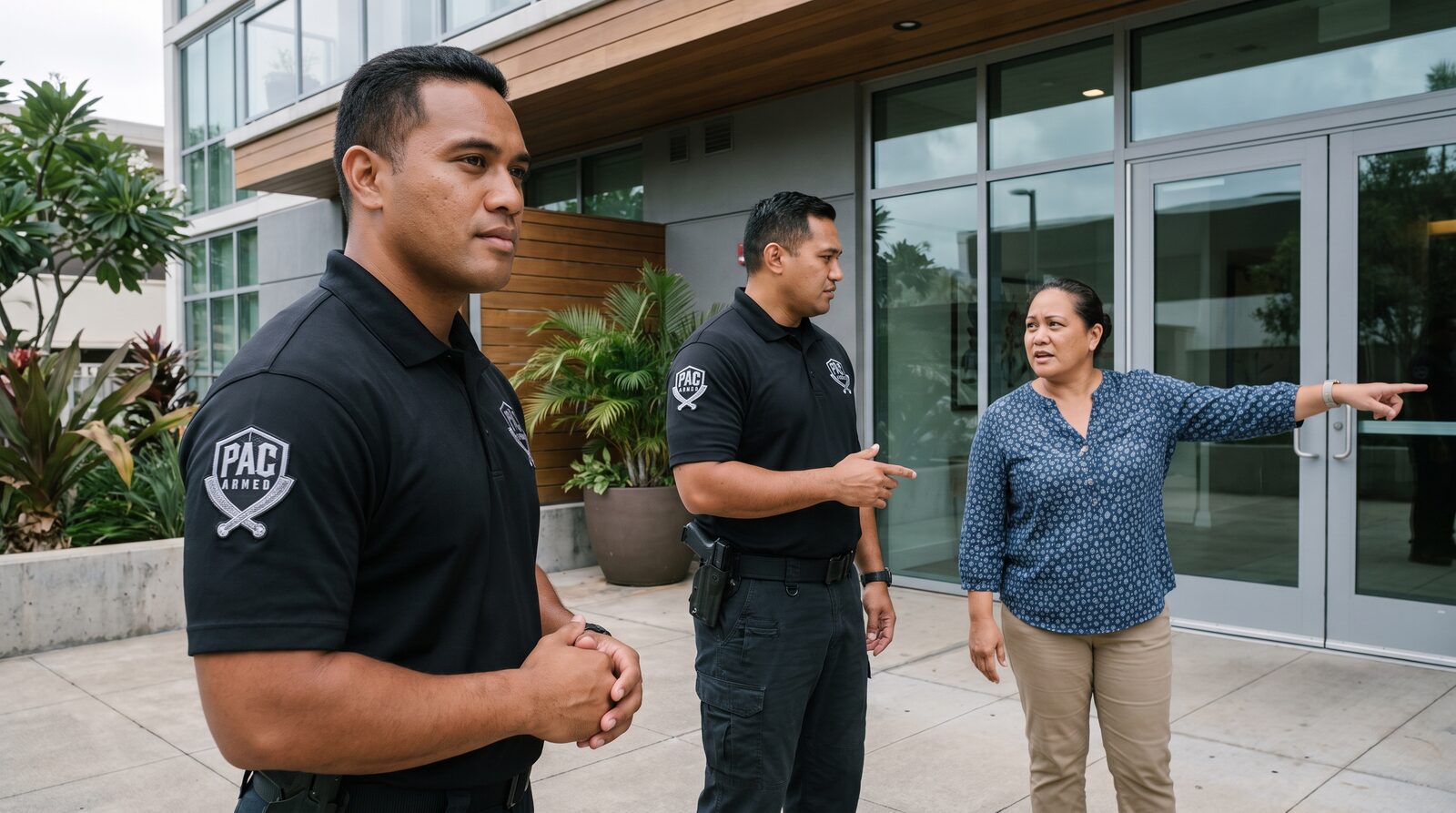
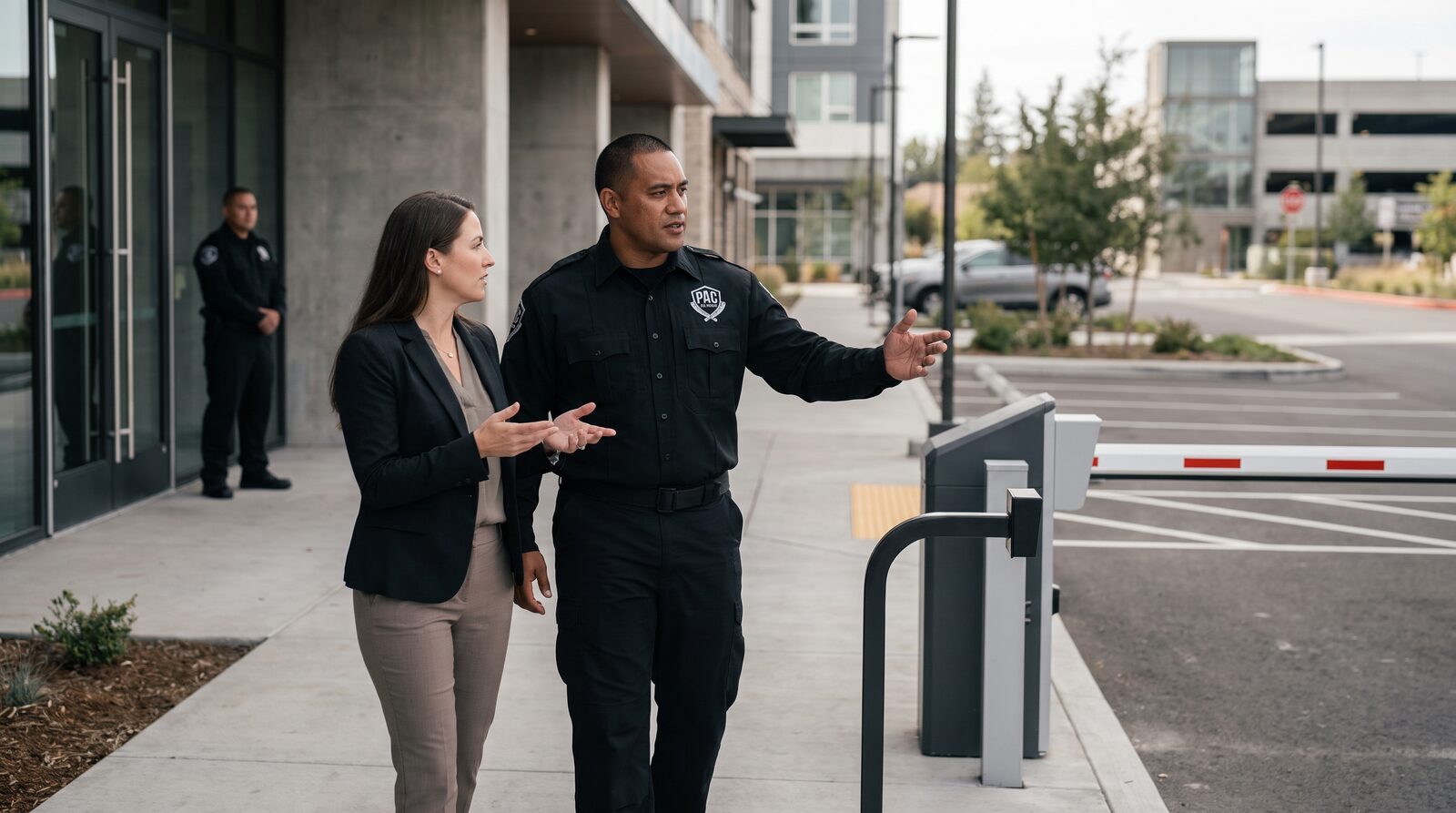
During active construction hours, security may support the process of identifying workers, vendors, subcontractors, and deliveries entering the property.
After hours, the standard is usually more direct: unless an individual has specific authorization, there may be no reason for that person to be inside the site.
Clear access procedures help security officers avoid uncertainty.
Management should establish:
- Approved working hours
- Authorized after-hours personnel
- Delivery procedures
- Contractor identification expectations
- Vehicle-entry rules
- Areas that require additional restrictions
- Who can approve unusual access
- Who should be contacted when authorization cannot be confirmed
These decisions should be made before an officer is faced with the situation.
Static Guards and Mobile Patrol Serve Different Needs
Some construction sites require an officer to remain on-site throughout the night. Others may be adequately served by several mobile patrol visits.
A dedicated construction security officer may be appropriate when:
- Valuable equipment remains exposed
- The property has repeated trespassing
- There are several access points
- The site occupies a large area
- Unauthorized activity has occurred nearby
- Immediate on-site intervention is important
- Deliveries or workers arrive during unusual hours
Mobile patrol can be effective for sites that need visible checks but do not require uninterrupted coverage. Patrol officers can inspect entrances, observe the perimeter, check designated areas, and document conditions during each visit.
Larger projects may use a combination of both services.
Visibility Is Part of the Deterrent
People are more likely to enter a construction site when they believe no one is paying attention.
Uniformed officers, marked patrol vehicles, active patrol movement, and consistent gate procedures communicate that the site is being monitored.
The officer should not remain in one location throughout the shift unless the assignment specifically requires it. Patrol routes should cover the areas identified as priorities by site management.
Security visibility is most useful when it is paired with attention. A person can see whether an officer is simply present or actively observing the property.
Officers Should Know What Normal Looks Like
Construction security becomes more effective when officers understand the expected condition of the site.
A gate that is normally closed but suddenly sits open should stand out. A vehicle parked in an unusual area should be noticed. Materials that appear to have been moved may require documentation. Lighting that has stopped working may create a new vulnerability.
This does not mean officers are expected to perform construction management. It means they should be familiar enough with the property to recognize meaningful changes.
Site supervisors can support this process by sharing relevant updates before each shift.
Good Reports Help Project Leadership Respond
A professional construction security report should give supervisors useful information when they return.
The report may include:
- Patrol times
- Areas inspected
- Access activity
- Visitor or vehicle information
- Open gates or doors
- Fence or lighting concerns
- Unusual sounds or movement
- Evidence of attempted entry
- Incidents and actions taken
- Management notifications
Reports should remain factual and organized. A short, clear report is more useful than a long report filled with assumptions.
Photos may also be used when authorized by the client and permitted by company policy.
Security Should Support the Project
Construction security should not create unnecessary obstacles for approved workers or deliveries. The objective is to protect the property while helping the project continue smoothly.
PAC Armed Security provides construction site security officers and mobile patrol services throughout Hawaiʻi and Nevada.
Coverage can be organized around the project schedule, known risks, site layout, access procedures, and value of the assets being protected.
As the job changes, the security plan should change with it.