Armed vs. Unarmed Security: Choosing the Right Coverage
Armed security is not automatically better, and unarmed security is not automatically enough. The right choice depends on the property, its risks, and the role officers are expected to perform.
PAC Armed SecurityJuly 20, 20265 min read
When businesses begin looking for security coverage, one of the first decisions is whether to hire armed or unarmed officers. It sounds like a simple choice, but the strongest security plan is rarely based on appearances alone.
An armed officer may be appropriate for one property and completely unnecessary for another. An unarmed officer may provide exactly the right balance of visibility, communication, and control in a residential community, hotel, retail environment, or corporate building.
The real question is not which type of officer looks more secure. It is which type of coverage fits the actual environment.
What Armed Security Officers Provide
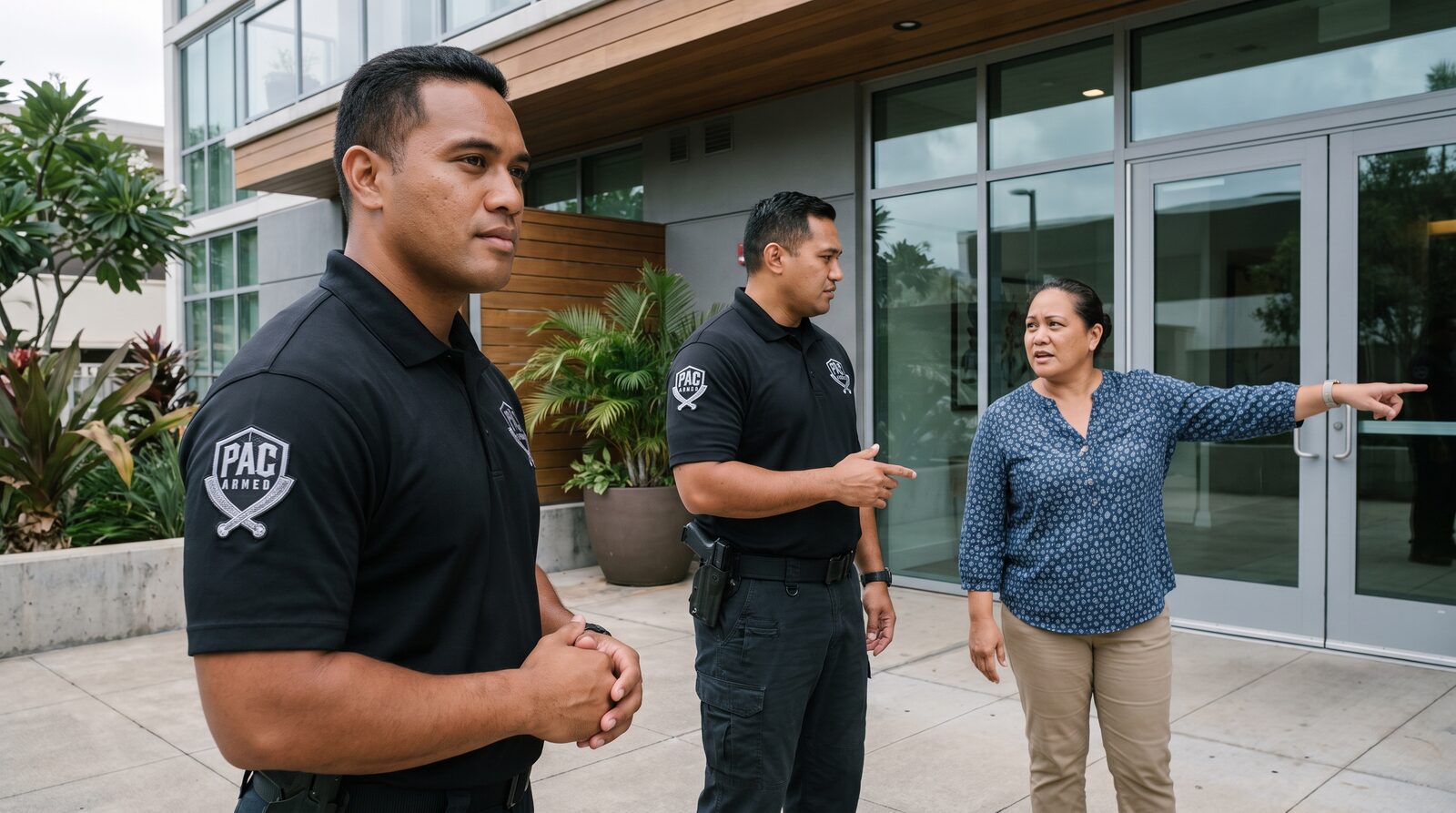
Armed security officers are generally considered for properties where the potential consequences of a serious incident are higher. Their presence provides a strong visual deterrent and an elevated level of preparedness.
Businesses may consider armed security for locations involving:
High-value property or equipment
Significant cash handling
Restricted or sensitive areas
Credible threats
Repeated criminal activity
Late-night operations
High-profile individuals
Locations where employees may face an increased safety risk
An armed security assignment requires more than placing a firearm on an officer's belt. The officer must have the training, judgment, temperament, and communication skills required to work responsibly around employees, visitors, residents, or members of the public.
In many environments, an armed officer must remain highly alert without making the property feel unnecessarily tense. That balance matters.
When Unarmed Security May Be the Better Fit
Unarmed security officers provide a visible professional presence without introducing a weapon into the environment. They are often well suited for properties where the primary security needs involve access control, patrol visibility, policy enforcement, documentation, and communication.
Unarmed officers are commonly used at:
Apartment and condominium communities
Hotels and resorts
Office buildings
Retail properties
Parking structures
Community events
Reception areas
Construction sites with moderate risk
Properties experiencing trespassing or nuisance activity
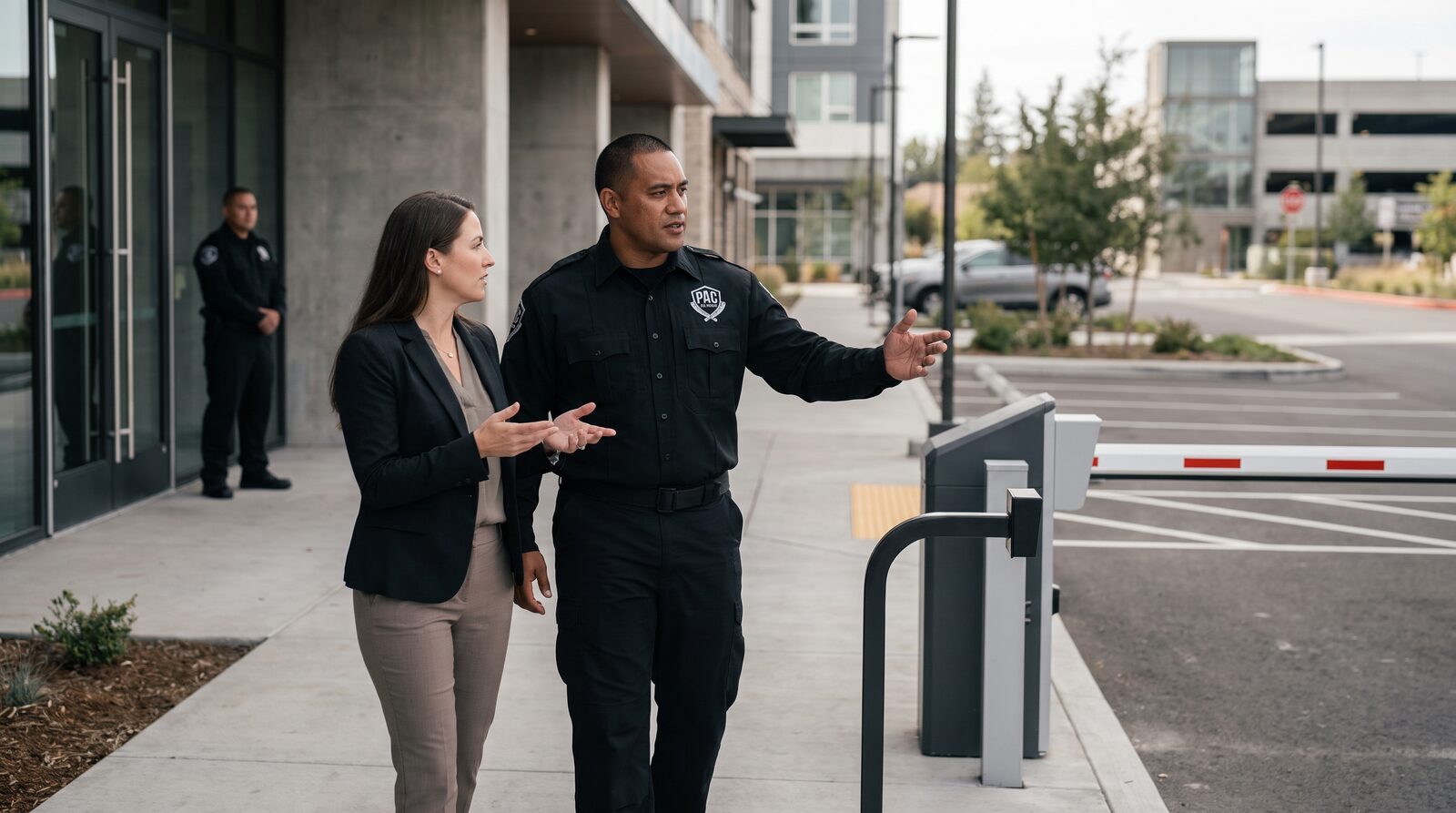
A capable unarmed officer can monitor entrances, verify visitors, conduct patrols, identify unusual activity, address minor disturbances, document incidents, and contact emergency services when necessary.
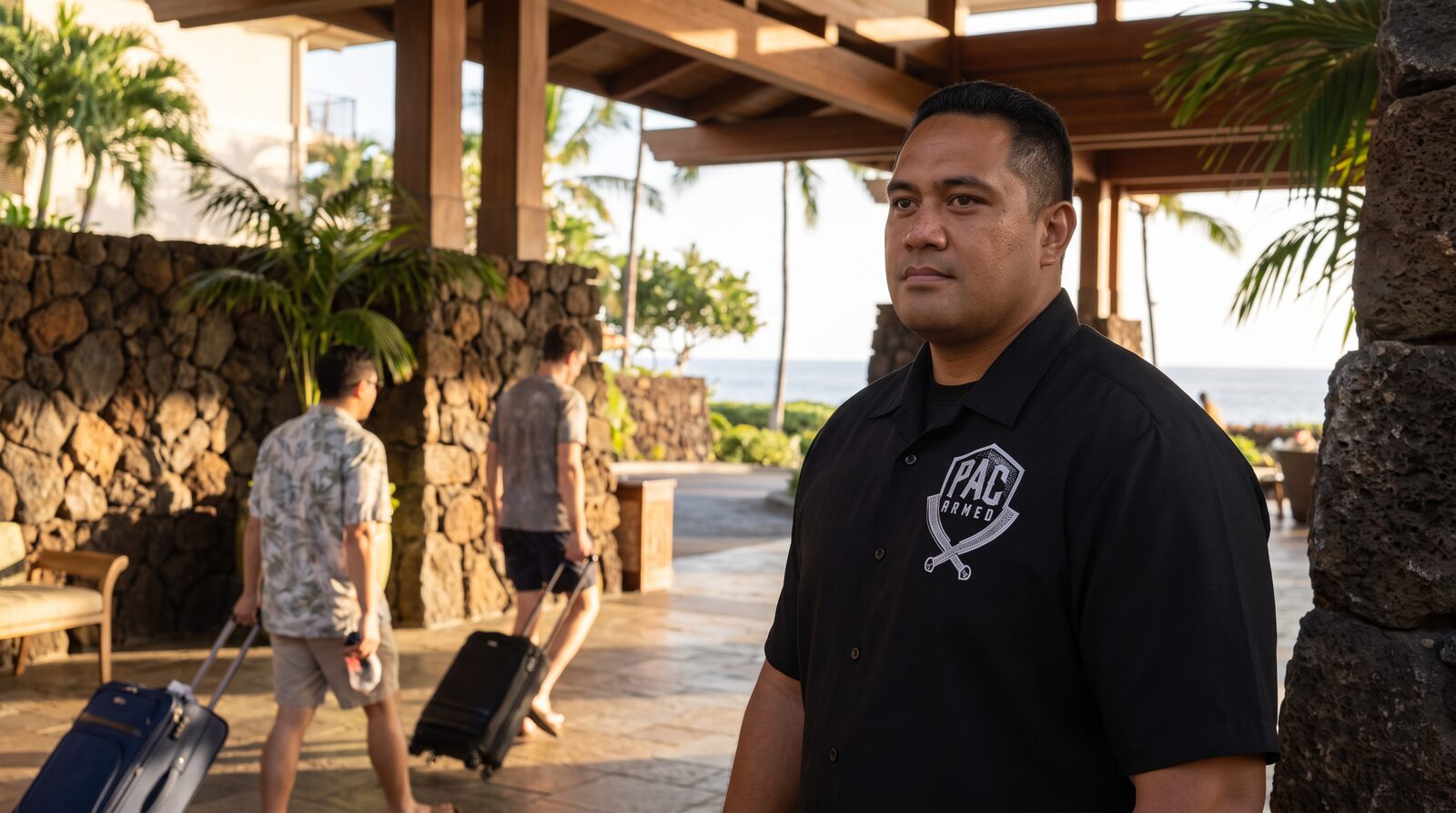
For hospitality and residential properties, approachability can be especially important. Residents and guests should feel comfortable asking an officer for assistance. The officer still needs to project authority, but that authority should not overwhelm the environment.
Armed Security Is Not Always the Stronger Choice
Hiring armed officers without first examining the site can create an unnecessary expense or a level of intensity that does not match the property.
For example, a hotel experiencing unauthorized parking and occasional noise complaints may benefit more from a professional unarmed officer who understands guest interaction and de-escalation. A commercial property storing expensive equipment in an area with recurring break-ins may require a different level of protection.
The most visible option is not always the most effective one.
Security coverage should be based on risk, not fear.
Some Properties Need Both
Armed and unarmed security do not have to be treated as competing choices. Larger properties and more complex operations sometimes use both.
A property might use unarmed officers at a public-facing entrance while assigning an armed officer to a restricted area. An event may use approachable unarmed officers for general guest screening while reserving armed personnel for a limited protective role away from the main crowd.
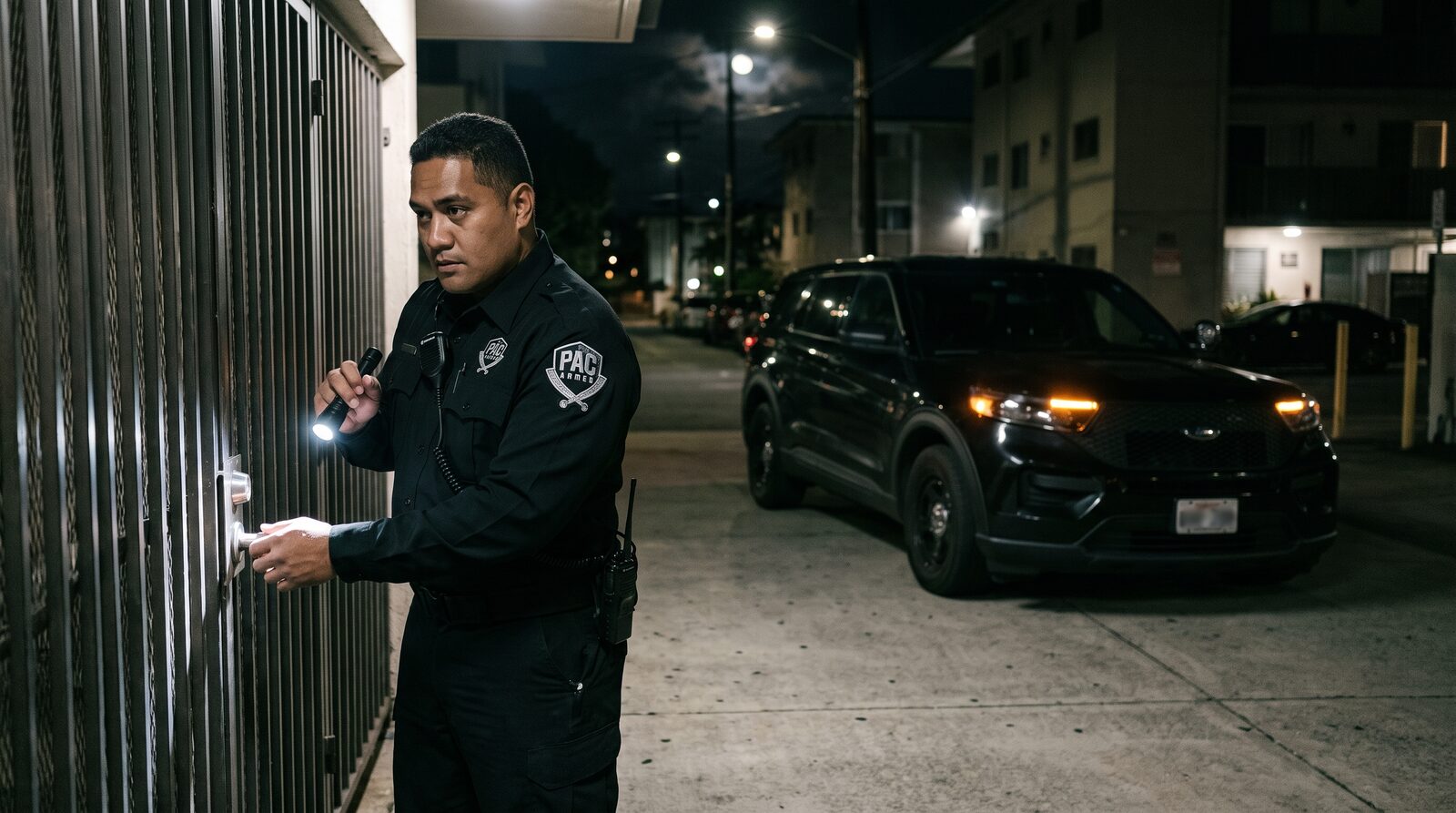
Coverage can also change by time of day. A property may need unarmed access control during business hours and a stronger deterrent overnight.
This layered approach allows the security plan to reflect how the property actually operates.
Start With the Property, Not the Uniform
Before selecting armed or unarmed security officers, property owners and managers should consider:
What has happened at the property before?
What concerns are employees, residents, or guests reporting?
Which areas are most vulnerable?
When is the property most exposed?
Will the officer interact regularly with the public?
Are valuable assets, cash, or equipment present?
Is the officer expected to remain at one post or patrol several areas?
What should happen when an incident escalates?
These details shape the assignment. They also help determine the appropriate staffing level, patrol schedule, officer qualifications, and post orders.
The Right Officer Matters as Much as the Right Security Level
A uniform alone does not protect a property. The person wearing it must understand the assignment and remain consistent throughout the shift.
An officer working at a resort needs a different communication style from an officer protecting a closed construction site overnight. An officer stationed at a residential community must know how to address unauthorized visitors without creating unnecessary conflict with residents. An officer assigned to an event must understand movement, crowd behavior, entry procedures, and the event organizer's expectations.
Matching officers to the environment is part of building effective coverage.
Building the Right Security Plan
PAC Armed Security provides armed and unarmed security services for properties, events, businesses, and organizations throughout Hawaiʻi and Nevada.
Rather than assuming every client needs the same solution, PAC Armed evaluates the site, operating hours, known concerns, public interaction, and responsibilities assigned to the officer.
The goal is to provide the level of protection the property actually needs without making the plan more complicated than it has to be.
Properties become more vulnerable after employees, customers, and contractors leave. Mobile patrols provide visible, documented security without requiring a permanent officer at one location.
Property managers should receive more than an officer in uniform. Reliable security requires clear expectations, suitable personnel, useful reporting, and responsive supervision.
Hotel and resort security should protect the property without changing the atmosphere guests came to enjoy. That requires awareness, communication, and a hospitality-first approach.
July 20, 20266 min read
Read More
Need Help Choosing the Right Coverage?
Speak with PAC Armed Security about your property, concerns, and operating environment. Our team can help you determine whether armed security, unarmed security, mobile patrol, or a combination of services makes the most sense.